What Is Dropshipping? How It Works, Real Costs, and How It Differs from Affiliates
G
GnurtFull-stack developer
10 min read
In this article
You’ve probably scrolled past a video like this: “sell online with no capital, no warehouse, a few thousand dollars a month.” The person in the video opens a store, lists a few products from a supplier, runs some ads, and orders keep coming in while they never touch a single item. It sounds great. But when you look closer, you run into questions the video never answers: where does the money actually go in an order, who is responsible when a delivery is late or faulty, and how much is left for the seller in the end?
In this article, we’ll look at what dropshipping is, the steps a dropshipping order goes through, and where the real cost of each order sits. The risks and how to start as a beginner, I’ve split into the next article (Coming soon) so you can read each part comfortably.
Quick summary
Dropshipping means selling without holding stock: the customer orders from your store, the supplier ships directly to the customer.
No capital for stock, but you still pay for ads, samples, the selling platform, and handling returns.
The customer only knows you, so every supplier mistake (late delivery, faulty goods) becomes your mistake.
What is dropshipping?
Dropshipping is a retail model where the seller doesn’t buy or hold stock. When a customer places an order, the seller passes it to the supplier, and the supplier packs and ships it straight to the customer. The seller handles the store, the prices, the marketing, and customer support; the supplier handles the goods and the shipping.
In plain terms, you stand in the middle like a showroom with no warehouse. The customer sees the product on your site and pays you, but the item ships from someone else’s warehouse. The difference between your selling price and what you pay the supplier is your income, and from that you still have to subtract a lot of other costs, as I’ll explain below.
A concrete example: you open a store selling phone stands for $25. A customer orders one and pays you $25. You order the same item from the supplier for $12 (shipping included) and fill in the customer’s address. A few days later, the customer receives the stand from the supplier’s warehouse, and you never saw the item.
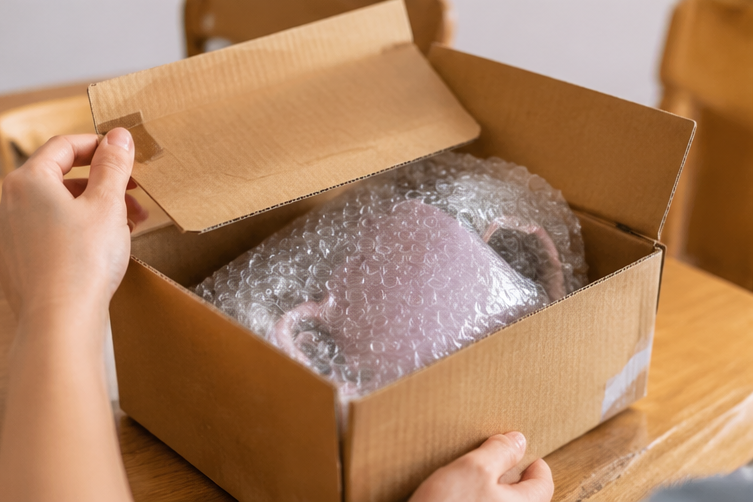
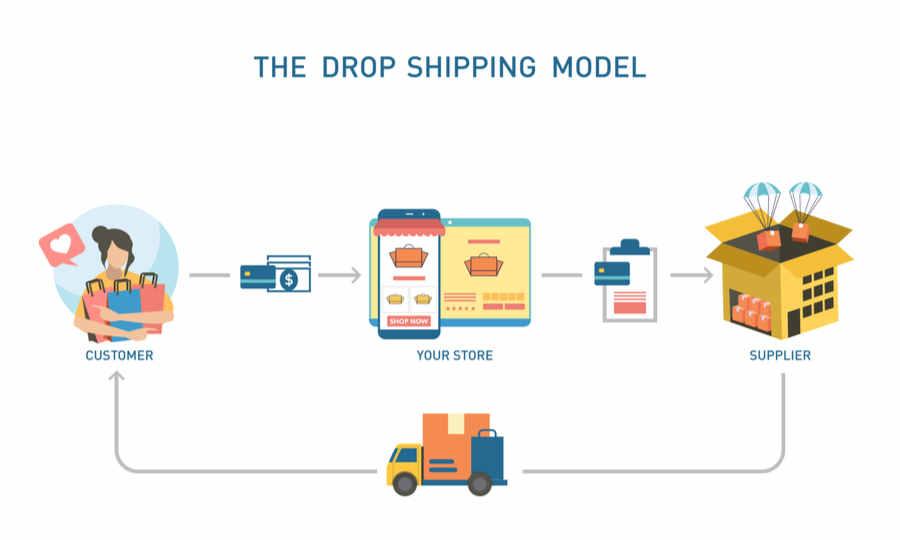
The customer receives the item from the supplier’s warehouse, while you have never seen it yourself.
What steps does a dropshipping order go through?
Understanding the journey of an order is the fastest way to see how dropshipping differs from ordinary selling, and where the risk sits. A typical order goes through five steps:
You choose a supplier and list the products. You find a supplier directly, through a wholesale marketplace, or through a dropshipping app, then put their products in your store at prices you set. Many apps sync images, descriptions, and stock automatically.
The customer orders and pays you. The customer pays the retail price in your store. This is the only point in the whole process where money comes to you first.
You pass the order to the supplier. You pay the supplier the wholesale price plus shipping, along with the customer’s address. This step can be done by hand or left to an app to forward automatically.
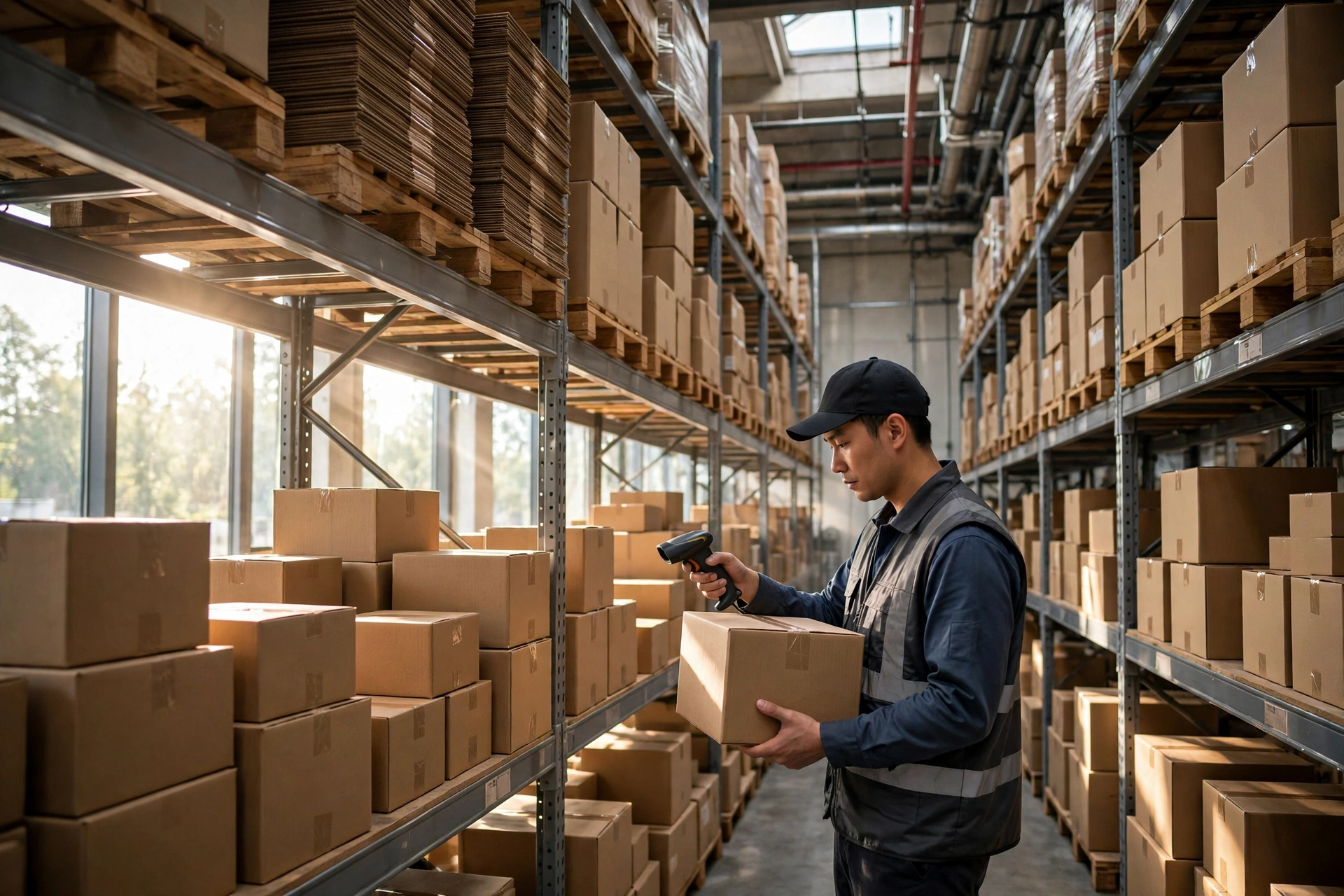
The supplier packs and ships directly to the customer. Depending on the supplier, the parcel may carry your branding or just plain packaging.
The customer receives the goods, and you handle everything after the sale. Late goods, faulty goods, exchanges, or refunds are all yours to deal with, because to the customer, you are the seller.
Looking at these five steps, you’ll see something the ad videos usually skip: you control steps 1, 2, and 5, but steps 3 and 4 are in someone else’s hands. And step 4 (packing and shipping) is the step that decides whether the customer is happy. Most of the risk in dropshipping comes from that gap.
5-step diagram of a dropshipping order flow.
How is dropshipping different from traditional selling and affiliate marketing?
Dropshipping is often confused with affiliate marketing, because neither needs stock. The difference is who the seller is in the customer’s eyes. With affiliate marketing, you send the customer to someone else’s store and earn a commission; the customer buys from and complains to that store. With dropshipping, the customer buys and pays in your store, so you carry the responsibility of a real seller.
Criteria
Traditional selling
Dropshipping
Affiliate
Upfront stock cost
Must buy first
No need to buy first
None
Storage and packing
You handle it
Supplier handles it
Original store handles it
Who sets the price
You
You
Original store
Who handles customer complaints
You
You
Original store
Control over product quality
High
Low
None
Profit margin per order
Highest when buying in bulk
Medium to low
Commission only
As the table shows, dropshipping sits between the other two models: you get to set prices and build a brand like a traditional seller, but you don’t control the goods the way an affiliate doesn’t either. In exchange for not holding stock, the responsibility to the customer still rests entirely with you.
Is “no capital needed” true? Let’s work out the cost of one order
“No capital needed” is only half true. You don’t need capital to buy stock, but you still need money to get your first order. The clearest way to see it is to lay out every cost of one order and subtract them one by one.
Back to the $25 phone stand. The figures below are an illustration to show the cost structure, not real survey data:
Item
Amount (USD)
Note
Price charged to customer
25.00
Money you take in
Wholesale price + shipping
−12.00
Paid to the supplier
Payment gateway fee
−1.05
Usually a small percentage of the price plus a small fixed fee, depending on the gateway
Advertising to get one order
−8.00
Ad spend divided by the orders it brings in
Refund and return reserve
−1.25
Assuming 5% of revenue
Platform and apps (per order)
−1.00
Monthly store and app fees
Remaining
1.70
About 7% of the price
To put it plainly: the $13 gap between the selling price and the wholesale price leaves just $1.70 after costs.
What’s striking is how good the starting gap looks: sell at 25, buy at 12, profit 13. But advertising eats most of that profit. If the ads work poorly and each order costs $12 in ads instead of $8, this order loses money. On the other hand, if the customer comes back for a second order with no ads needed, the second order earns almost five times the first.
For a reality check: a Shopify roundup (updated November 2026) cites a TrueProfit analysis saying the net profit margin for dropshipping is usually 15–25%. My example comes out lower than that, because I deliberately set ad costs high, like a new store with no returning customers.
With dropshipping, the capital doesn’t disappear, it moves: instead of sitting in warehouse stock, it sits in the ad budget and samples. The difference is that money spent on ads can’t be sold back the way leftover stock can.
On top of the per-order costs, before you sell anything you need a small amount to order samples. According to Shopify, samples from a supplier usually cost around $50–100 including shipping. That’s money worth spending, because it’s the only way to know what the item you’re about to sell looks like when it reaches the customer.
Common dropshipping models
Not every dropshipping store runs the same way. Where you sell and where you source from decides the costs, delivery speed, and how much of a brand you can build.
Selling on your own website
You build a store on a platform like Shopify or WooCommerce, connect it to a dropshipping app to pull in products and forward orders automatically. You have full control over the design, prices, and customer data, but you have to bring people to the store yourself, usually with ads. This is the most common model in how-to videos, and also the one where ad costs decide almost everything.
Selling on a marketplace
A marketplace already has buyers, so you spend less bringing in customers. In return, you have to play by the marketplace’s rules, and each one has its own dropshipping policy. For example, eBay allows dropshipping when you source directly from a wholesale supplier, but forbids buying from another retailer or marketplace and having them ship straight to your customer. Breaking the rules can get your listings removed, your account restricted, or banned. Before selling on any marketplace, read its dropshipping policy.
Print-on-demand
Print-on-demand is a form of dropshipping where the product is only made after the customer orders: you create a design (T-shirts, mugs, art prints), the printer prints it on a blank and ships it to the customer. The strength is that the product carries your own design, so rivals can’t copy it exactly the way they can with ready-made goods. The weakness is that the blank plus printing usually costs more, which thins the margin, and delivery takes longer because production has to wait.
Domestic or cross-border suppliers
A supplier in the same country as the customer delivers faster and handles returns more easily, but the wholesale price is usually higher. A supplier abroad is cheaper, but delivery stretches out: according to the China EMS shipping page cited by Shopify, an ePacket order from a Chinese supplier takes about 7–15 working days. That has to sit next to what buyers expect today — a 2026 AlixPartners delivery survey (also via Shopify) found that customers want free shipping and delivery within three days.
Common misconceptions about dropshipping
Wrong
Right
Dropshipping is making money with no capital.
No capital for stock, but you still need money for ads, samples, and the platform — and money spent on ads can’t be recovered.
Faulty goods are the supplier’s fault, not mine.
To the customer, you are the seller. Refunds, bad reviews, and disputes all land on you.
Dropshipping is passive income.
Choosing products, improving ads, and looking after customers is daily work; only forwarding the order can be automated.
Dropshipping is a scam or illegal.
It’s a legal retail model; the problem is in how it’s done, like false advertising or breaking a marketplace’s policy.
Before you put money into dropshipping
By now you can see that dropshipping is neither the money printer in the videos nor a scam. It’s a way of selling that trades the risk of holding stock for the risk of advertising and the risk of depending on a supplier. To tell whether this model fits you, take the cost table above, plug in the real prices of a product you’re looking at, and see what’s left in the “remaining” row when ad costs rise by half.
If that number still makes you want to try, the next step is to read about the risks of dropshipping and how to start as a beginner (Coming soon). That article goes through the situations sellers run into most often and the order to start in so you lose the least money while learning.
Frequently asked questions about dropshipping
Is dropshipping legal?
Yes. Dropshipping is a legal retail model, and many large marketplaces allow it with their own conditions. What to avoid is false advertising about the product or delivery time, and breaking the dropshipping policy of the marketplace you sell on.
How is dropshipping different from affiliate marketing?
With dropshipping, the customer buys and pays in your store, you set the prices, and you take responsibility after the sale. With affiliate marketing, you only refer the customer to another store and earn a commission; the customer buys from and complains to that store directly.
Is print-on-demand dropshipping?
Yes, print-on-demand is a form of dropshipping. The difference is that the product is only printed after the customer orders, based on your design, so you get a product of your own — but delivery usually takes longer and the margin is thinner.
If you are wondering what is SEO and GEO, here is the simplest explanation: SEO is how you optimise a website so it appears high in search results pages such as Google. GEO is how you optimise content so AI systems such as AI Overviews, ChatGPT or Perplexity choose it as a cited source when answering...
Quick answer A backlink is a link from another website pointing to your website. Google treats each backlink like a recommendation: if a reputable, topically relevant page links to you, that is a signal that your content is worth referencing. But not all backlinks are equal. A good backlink can help Google discover a new page...
Ever downloaded a program you weren't sure was safe? Installing it on your main machine feels risky, but not installing it means you never find out how it runs. The cleanest way is to open a separate Windows, fully isolated from your main machine, try it there, and close it when you're done. Windows has a…


Comments
You can use your Google account to comment. Google only shares your verified name and email address to display your name. You can log out at any time.
Sign in with GoogleNo comments yet. Be the first!